 Save this storySave this story
A good fragrance has always been an act of branding: You’re woodsy and mysterious, you’re light and fresh, you’re sweet and floral. For many, fragrance is not just an accessory; it’s an identity. So it’s no wonder that consumers today have looked for ways to extend this identity into other categories. If you love smelling like coconut, why not go all in and make everything smell like coconut? That means candles, air fresheners, detergent, and lately, hair care.
Not that great-smelling shampoo is anything new (hello, ’90s Herbal Essences). These days, though, consumers are looking for a high-end, sensorial experience from their hair care. And with the economy in flux, they’re demanding more bang for their buck. It’s not enough that a premium hair-care product makes your hair look and feel great. It should smell great—and maybe even do the dishes for you at a certain price point.
TikTok, as usual, helps the trend along. “PerfumeTok is normalizing scent rituals like layering perfumes, mists, oils, and hair scents as tools for identity and self-expression,” says Amy Rueckl, marketing director of fine fragrance at International Flavors and Fragrances (IFF), a global brand that creates scents and flavors for consumer products. People want to telegraph something about themselves with the way that they smell, that they’re cool and beachy, rich and unbothered, earthy and bohemian. She notes that hair and body mists saw double-digit market growth in early 2025, “proving marketplace demand for lighter, re-applicable scent formats that function as daily accessories.”
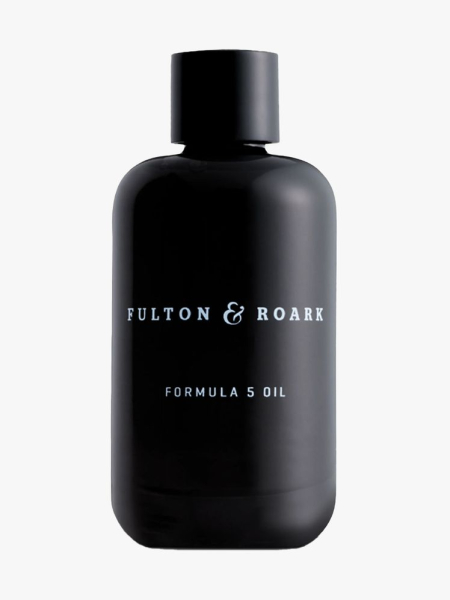
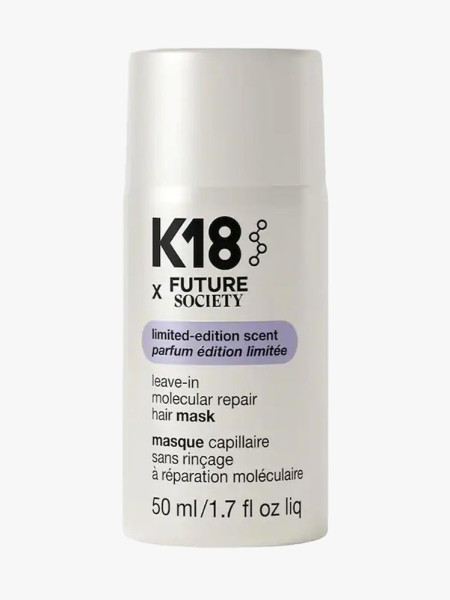
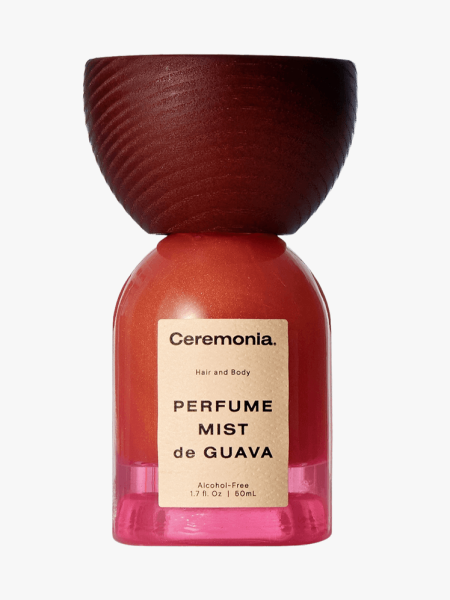
Hair care is a natural evolution for fragrance. In fact, those looking to build out a scent wardrobe beyond their wrists may find hair to be an accessible entry point to explore luxury fragrances simply because the format feels familiar. And seemingly everyone is trying to get a piece of the budding market. Fragrance brands, like Fulton & Roark or Byredo, are releasing their own hair-care products. And some hair-care brands, like Ceremonia, Ouai, and Kerastase are capitalizing on signature eau de parfums and turning them into allover hair and body mists. Others are looking to collaborate, like the K18 and Future Society hair mask partnership and last year's Ellis Brooklyn and Amika Miami Nectar Dry Shampoo.
 Save to wishlist
Fulton & Roark
Formula 5 Oil
Neiman Marcus
 Save to wishlist
K18 X Future Society
Leave-In Molecular Repair Hair Mask
K18
 Save to wishlist
Ceremonia
Perfume Mist de Guava
Sephora
Revolve
Credo Beauty
 Save to wishlist
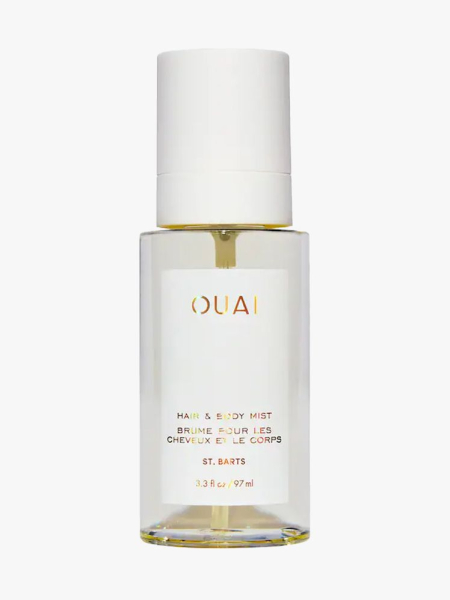
Ouai
Hair and Body Mist in St. Barts
Amazon
Ulta Beauty
Sephora
 Save to wishlist
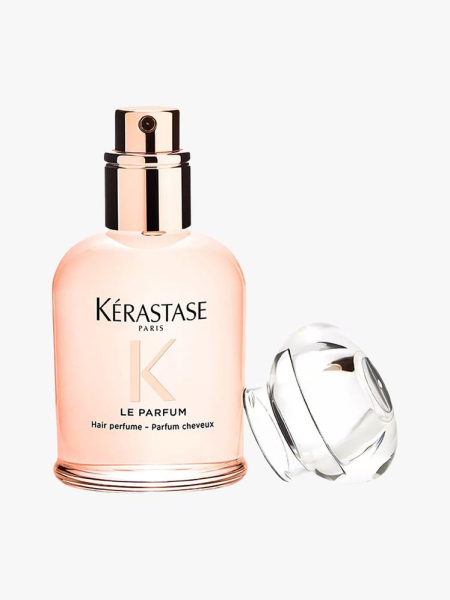
Kérastase
Gloss Absolu Hair Perfume
Sephora
Kohl’s
Why is hair scenting a thing?
The growth of the “hair as scent” category sees no end—largely because it works. “Hair is a fantastic [fragrance] diffuser,” says Kevin Keller, cofounder of Fulton & Roark. “It tends to project more dynamically than on skin because of the relative movement.”
That, and scents tend to last longer on hair. (Ever smell your pillow the night after a bonfire?) “Hair is composed primarily of keratin, a fibrous protein with a complex structure that can bind and trap fragrance molecules,” says Hallie McDonald, MD, an Austin, Texas-based, board-certified dermatologist. “The cuticle, which is the outermost layer of the hair shaft, has overlapping scales that create small spaces where compounds can settle.”
And while the porous nature of hair allows fragrance to really diffuse over time, skin is biologically active. “It produces sweat and sebum and is constantly shedding cells. That contributes to more rapid fragrance evaporation and breakdown.” It also has a warmer surface temperature than hair, which speeds up evaporation.
If you really want to leave a lasting impression, your hair is a good place to start.
Can't I just use eau de parfum in my hair?
“Why would I spend money on a hair fragrance when I could just spray my perfume onto my hair?” you may be asking. Well, that’s a bit like using Febreeze on your wrists as a perfume. Can you do it? Sure. Should you do it? Probably not.
Eau de parfum (EDP) and eau de toilette (EDT), and all the various concentrations therein, rely on alcohol as a carrier and solvent. “Fragrance itself does not inherently hurt the cuticle, but the combination of high alcohol content and repeated exposure can exacerbate dryness and brittleness,” says Dr. McDonald. “Alcohol evaporates quickly, which helps disperse scent, but it can also temporarily strip lipids and moisture from the hair shaft.” Plus, you’re not doing your scalp any favors by spraying irritating ingredients onto it, especially if you have a history of eczema, psoriasis, or seborrheic dermatitis. (Certain ingredients, like cold-pressed citrus oil, can be photosensitizing in very high concentrations, says Dr. McDonald, though it’s uncommon.)
“The fundamental difference comes down to alcohol content,” says Patty Hidalgo, vice president perfumer for IFF. “Hair mists and hair perfumes are formulated with low to no alcohol to avoid drying out or damaging the hair.” And one does not simply drop their fragrance recipe into a conditioner, shake it up, and call it a day. Not only are there regulatory differences and exposure limits, says New York-based perfumer Darryl Do, but certain formulas that are stable in alcohol might not be in an oil or a cream.
“Making a perfume smell good in alcohol is completely different from making a shampoo smell good,” adds fragrance influencer Emma, the perfumer student behind the social media account @perfumerism. “The chemical environments are completely different.”
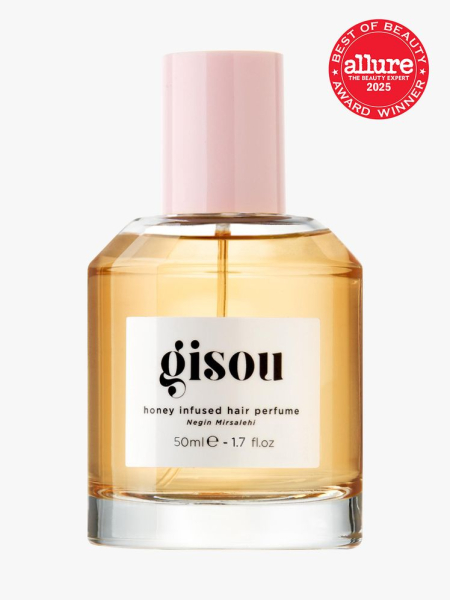
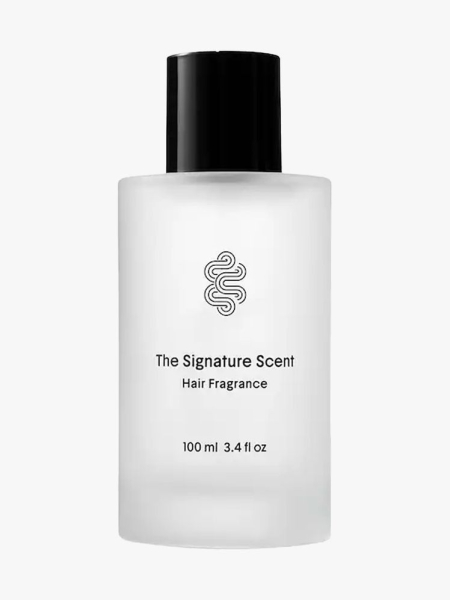
And since we have higher expectations for our hair-care (and all) products these days, it doesn’t hurt if they also have nourishing ingredients. Dr. McDonald recommends looking for humectants like glycerin (The Signature Scent's hair fragrance contains glycerin and aloe) or panthenol to help retain moisture, conditioning silicones like dimethicone to smooth the cuticle, and lightweight oils for softness (Gisou's hair perfume is formulated with softening argan oil).
 Save to wishlist
Gisou
Honey Infused Hair Perfume
Amazon
Sephora
Revolve
 Save to wishlist
Crown Affair
Signature Hair Fragrance
Sephora
Your favorite eau de parfum may smell slightly different as a hair fragrance.
If a brand is attempting to repackage its signature scent as a hair-care product or vice versa, “The challenge is that fragrance DNA is deeply tied to the interaction between the formula and the base it's delivered in. The top notes especially can shift dramatically,” says Keller.
Also, some fragrance notes lend themselves to hair products more than others. “Musks cling to the hair, and woods and ambers can maintain a presence without alcohol lift,” says Do. “Synthetic florals, rather than delicate natural materials, withstand stability, heat, and styling better.”
On the other hand, citrus notes or delicate natural absolutes can be volatile, discolor certain bases, or may just not make sense economically for a rinse-off product. “Vanilla is an example of something that performs well in fine fragrance, but struggles in hair care,” says Emma. “Vanillin is a long-lasting base note in the perfume world, but since it has a low LogP (the measure of the ability of a chemical compound to dissolve in fats and oils) of 1, it is one of the least long-lasting in a hair product.” Ultimately, it’s a delicate balance.
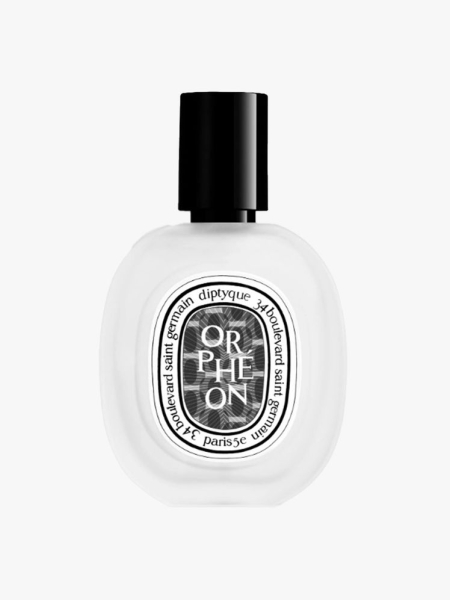
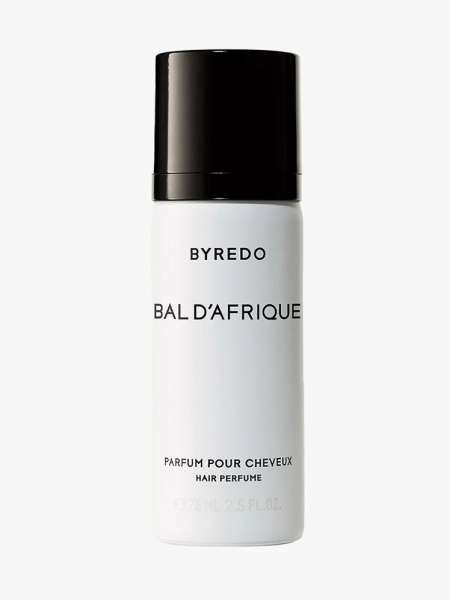
“Maintaining DNA is less about copying the formula and more about capturing the feeling and character of the original—the emotional impression—which requires real creative and technical skill to pull off,” says Keller. One clear example of this is Dyptique’s Orpheon, which smells different as an EDT, EDP, and hair mist. All evoke the same vintage vibe, though. Byredo's Bal D'Afrique smells lighter as a hair perfume than an EDP, but both have a similar creamy, floral essence.
 Save to wishlist
Diptyque
Orphéon Hair Mist
Diptyque
 Save to wishlist
Byredo
Bal D’Afrique Hair Perfume
Nordstrom
Macy’s
“Every fragrance is unique and has its own opportunities for ancillary development,” says Hidalgo. “When translating a fragrance that is a signature EDT or EDP, we might soften the top notes or rebalance the heavier base notes, for example, but perfumers approach each fragrance individually as a work of art and science to make sure that the result is as close as possible to the original.”
“Consumers expect it to smell like the original perfume, and it should, but it will most likely not be identical,” adds Do.
How to build your hair-fragrance wardrobe
Buying hair care for the scent isn’t typically meant to replace your daily spritz of eau de parfum (though it’s a great entry point if you haven’t dabbled in fragrance at all). Instead, look at scent for your hair as an extension of your fragrance wardrobe. A way to really immerse yourself and your lifestyle in a signature scent. “Each product adds a different layer,” says Do. “You are building your own fragrance bubble at that point, individualizing it more and more.”
“To avoid overwhelming the senses, it’s best to apply hair perfume lightly, focusing on mid-lengths to ends, and to select scents from complementary fragrance families so they harmonize rather than compete,” says Rachael Larsen, associate fragrance development manager at DSM-Firmenich, who also recommends combing the product through your hair for even distribution. “This approach allows for a layered, multidimensional scent experience that feels cohesive and intentional.”
If layering feels too intimidating, you can stick to one signature scent across products. “The most reliable way to avoid clashing entirely is to layer with the same scent across product formats,” says Keller. “That's a core reason why we offer our fragrances across multiple formats—solid cologne, oil, bar soap, deodorant. You're not just adding fragrance, you're building depth because each format releases scent differently and at different rates, so the cumulative effect is richer and longer-lasting than any single product could achieve alone. And because everything is working from the same olfactory blueprint, nothing competes.”
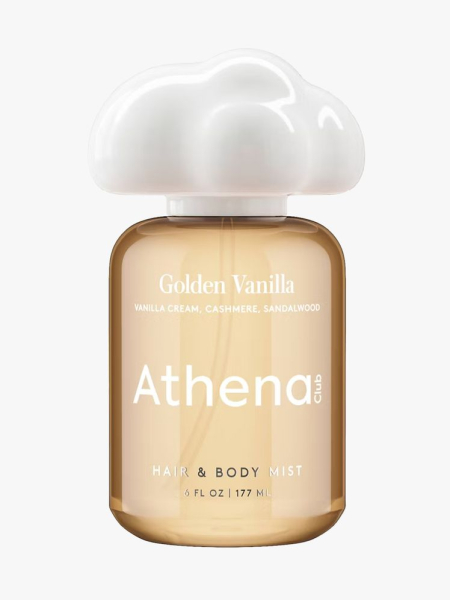
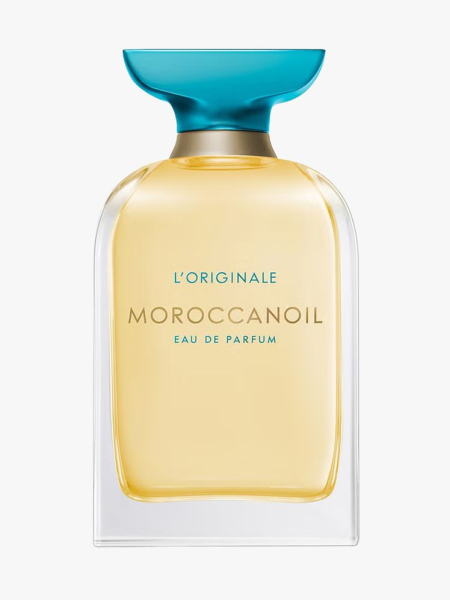
Athena Club's hair and body mist, for example, is designed to be spritzed on the mid-lengths of the hair and on your body, so you get a full immersion of the scent diffusing differently. They also have matching lotions and deodorants (and sell them in trios) so you can double or triple-down on your favorite fragrance line. Or if you happen to love the scent of Moroccanoil hair products, you can start with their shampoo and conditioner and follow with their EDP on your wrists.
 Save to wishlist
Athena Club
Hair & Body Mist
Athena Club
 Save to wishlist
Moroccanoil
L’Originale Moroccanoil Eau de Parfum
Ulta Beauty
Sephora
If you want to build a more dynamic fragrance wardrobe with layered scents and notes, intention is key. “Matching fragrance families usually works well, like woody with woody,” says Do. Contrasting ingredients can also work, says Hidalgo, but it takes some thought. She recommends complementary counterpoints like “clean musk”—clean being on the fresh and bright end of the spectrum, musk having a warmer, earthier feel. They layer like building blocks (heavier musk as the foundation), but both are minimalist and natural, which ties them together well. If this all sounds like a foreign language, check out the notes of your favorite fragrances and see what’s paired together.
The application can also be gamed out for maximum effect: “Stagger or layer formats for peak performance, starting with a scented hair treatment or oil, adding a veil of mist, and finishing with a skin EDP to maximize last and minimize clash,” says Hidalgo.
Ultimately, it’s a personal journey. “There are no firm rules,” says Emma.
Frequently Asked Questions
How we test and review products
When Allure tests a product, our editors look at it from every angle in an effort to best serve you. We review ingredients, scrutinize brand claims, and, when necessary, examine peer-reviewed scientific and medical studies. In addition to testing each and every product that's included in each and every review, we rely on experts who shape their fields, including dermatology, cosmetic chemistry, and medicine, to help us vet the ingredients and formulas.
For our list of the best hair fragrances, we considered each product's performance across five primary categories: product ingredients, efficacy, fragrance, texture, and product wear. Our editorial team, which is composed of in-house writers, editors, and contributors, determined that every product excelled in each category—along with special consideration from board-certified dermatologists. To learn more information on our reporting and testing processes, read our complete reviews process and methodology page.
Our staff and testers
A beauty product is a personal purchase. You might be searching for a face cream to address persistent dryness or a new nail product to add to your Sunday self-care routine; you may simply be browsing around for the latest launches to hit the hair market. No matter what you seek or your individual needs and concerns, Allure wants to ensure that you love anything we recommend in our stories. We believe that having a diverse team of writers and editors—in addition to the wide range of outside testers and industry experts we regularly call upon—is essential to reaching that goal.
After all, can we really say a skin-care product is the "best" for people over 50 if the only testers we've solicited opinions from folks who have yet to hit 30? Can we honestly deem a high-end diffuser worthy of your hard-earned cash if it’s never been tested on curls? We're proud that our staff spans a wide range of ages, skin tones, hair textures, genders, and backgrounds, which means that we are able to fairly assess any beauty product that comes into the beauty closet.
Meet the experts
- Darryl Do is a perfumer based in New York City.
- Rachael Larsen is associate fragrance development manager for DSM-Firmenich, a fragrance ingredient company.
- Kevin Keller is co-founder of Fulton & Roark.
- Patty Hidalgo is VP perfumer at International Flavors and Fragrances (IFF).
- Amy Rueckl is the marketing director of fine fragrance (North America) at IFF.
- Hallie McDonald, MD, is a board-certified dermatologist based in Austin, TX, and co-founder of ERLY.
- Emma is the owner and operator of @perfumerism, a social media account dedicated to fragrance.